View
Drag






Your navigation menu is the GPS of your website. If the map is upside down, your customers will drive straight into a competitor's arms.
Visitors don't get lost on websites by accident. They get lost because navigation fails to guide them. Before someone reads your copy, trusts your brand or clicks a CTA, they're subconsciously asking one question:
Do I know where to go next?
If the answer isn't an immediate yes, friction appears. Hesitation follows. And conversions quietly die. Navigation isn't decoration. It's direction. And when it's structured poorly, even the best offers struggle to perform.
Your menu sends signals long before users interact with it. Here's what visitors are interpreting at a glance:

When navigation feels confident and intentional, users feel safe moving forward. When it doesn't, they slow down or leave.
Users don't arrive thinking in departments, features or product lines. They arrive with a problem.
If your navigation mirrors your organizational chart instead of user intent, you're forcing visitors to translate your business before they can take action.
High-converting navigation answers:
What do you offer?
Is this right for me?
What should I do next?
When those answers are easy to find, decision-making feels effortless. And effortless decisions convert.
Every additional navigation option increases cognitive load.
When users are faced with too many paths, they don't explore more; they hesitate more. This is why high-performing sites aggressively limit their primary navigation.
As a rule of thumb:
Keep top-level navigation between 5–7 items
Push secondary pages into dropdowns or footers
Remove anything that doesn't directly support the user journey
Conversion-focused navigation isn't about completeness. It's about clarity.
Navigation labels are not the place to be clever.
If a visitor has to pause to interpret a label, momentum is already lost. Predictable language builds confidence because it confirms expectations.
Compare the difference:
"Solutions" vs "What We Do"
"Engage" vs "Contact"
"Value" vs "Pricing"
Clarity doesn't just improve usability. It builds trust. And trust is a prerequisite for conversion.
Not all navigation items should feel equal.
Your most important actions, like booking a call, starting a trial or requesting a quote, should stand out visually. This can be achieved through:
Button-style CTAs
Contrast and color
Strategic placement
When everything looks the same, users don't know what matters. When hierarchy is clear, users instinctively follow the intended path.
Dropdown menus often fail because they try to do too much.
Effective dropdowns:
Group related items logically
Use spacing and headings for scannability
Avoid more than one level of depth
If your dropdown feels like a sitemap, it's working against you. Navigation should feel like guidance, not a research project.
Every site has pages that drive real business results.
Your navigation should make those pages easy to reach from anywhere. If users have to hunt for high-intent actions, you're adding unnecessary friction.
Ask yourself:
Are conversion pages visible without scrolling menus?
Do users encounter CTAs early in their journey?
Is there a clear progression from interest to action?
Navigation should escort users forward, not leave them wandering.
On mobile, navigation errors are amplified.
Limited screen space means every link must earn its place. Mobile-first navigation should:
Surface only essential options
Keep CTAs within easy reach
Minimize taps between entry and action
If a link doesn't support conversion on mobile, it likely doesn't belong in primary navigation at all.
A website that is hard to navigate is a website that is hard to trust. If your menu feels like a scavenger hunt, your visitors won't stick around to solve it. They'll simply find an easier path with a competitor. Navigation should be the silent engine that drives momentum, turning a moment of curiosity into a concrete business lead.
This requires a strategic approach to web design, where every element, from label choice to mobile touch targets, is engineered to reduce doubt and create forward motion.
At Hierographx, we don't just prioritize navigation; we plan out the easiest path for your customers. We simplify how your site is organized, so the right visitors find the right solutions without a second thought. Every menu we build is designed to remove confusion, build authority and guide your audience toward the results your business needs to grow. Our commitment to this level of detail is exactly why we lead in Michigan web design and development projects across the region.
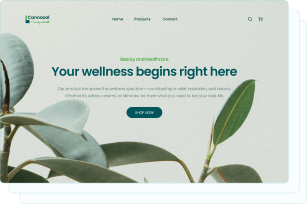
Captivate your audience and enhance brand perception with our custom website design services, creating an unforgettable digital experience.

Captivate your audience and enhance brand perception with our custom website design services, creating an unforgettable digital experience.